Ayodhya through time
From the founding by Manu and the Ramayana of Lord Rama, through the medieval era and the long legal journey, to the 2024 Ram Mandir consecration.
Founded by Manu
Per the Atharva Veda and Ramayana, Ayodhya was founded by Vaivasvata Manu - making it among the earliest known cities on earth.
Capital of Kosala
Capital of the Ikshvaku/Suryavamsha dynasty under King Dasharatha; described in the Ramayana as a fortified, golden city of unmatched prosperity.
Birth of Lord Rama
Lord Rama, the seventh avatar of Vishnu, is born to Kaushalya and Dasharatha - the central event commemorated as Ram Navami.
Ramayana Era
Marriage to Sita, 14 years of vanvas, the war with Ravana and the Rama-rajya - the ideal kingdom - established on return to Ayodhya.
Buddhist & Jain Era
Identified by some scholars with Saketa, a flourishing city visited by the Buddha; also revered as the birthplace of five Jain Tirthankaras including Rishabhanatha.
Gupta Patronage
Becomes a major cultural and religious centre under the Gupta empire; temples and reservoirs are built and expanded.
Medieval Temple Building
Records and inscriptions mention temple construction and renovations around the Janmabhoomi area.
Disputed Structure Built
A mosque (later called Babri Masjid) is built at the disputed site by Mir Baqi during the reign of Babur - the beginning of a centuries-long conflict.
Disputes Begin
First recorded communal disputes (1853); the British put up boundary fences (1859); idols of Ram Lalla appear inside the structure in December 1949.
Shilanyas & Demolition
Shilanyas (foundation-stone laying) in 1989; the disputed structure is demolished on 6 December 1992.
Supreme Court Verdict
A 5-judge Constitution Bench unanimously awards the 2.77-acre site to the Hindu side for construction of a Ram temple; 5 acres allocated separately for a mosque.
Bhumi Pujan
Prime Minister Narendra Modi performs the bhumi pujan, laying the foundation stone of the new Ram Janmabhoomi Mandir.
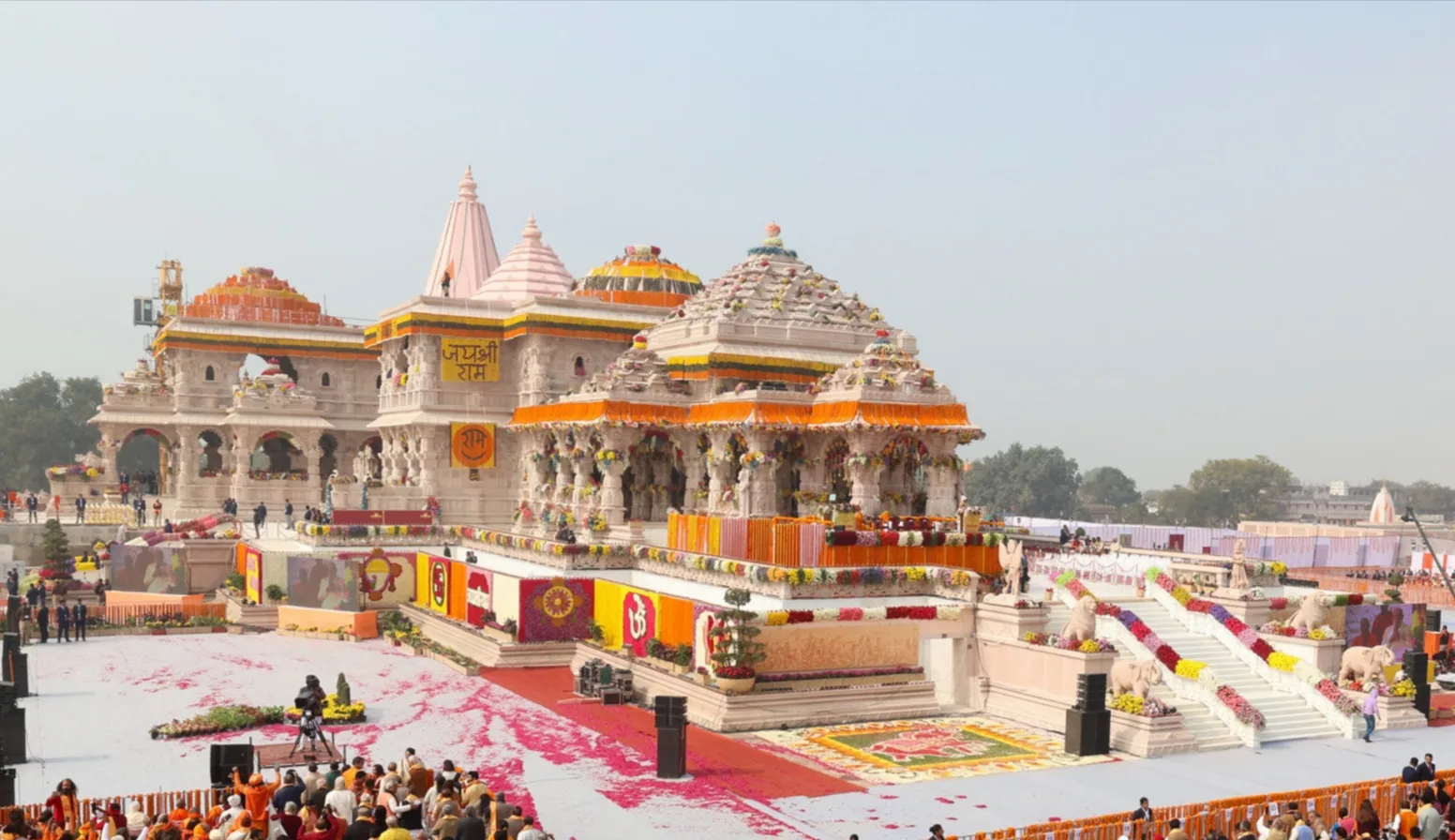
Pran Pratishtha
Consecration ceremony of Ram Lalla in the new temple's garbha-griha, performed by PM Modi alongside chief priests; the sanctum opens to the public the next day.
Maharishi Valmiki Intl Airport
Phase 1 of Ayodhya's new international airport (AYJ) is inaugurated, dramatically improving connectivity.
City Renaissance
Ram Path, Bhakti Path and Dharma Path widened; riverfront, museums and parikrama corridors developed under the Ayodhya master plan.